
You Don't Have a Money Problem. You Have a Relationship With Money.
And like any relationship, it can be anxious, avoidant, controlling, or abusive — no matter how much is in the account.
You can be financially literate and still feel panic every time money leaves your account. You can earn more than you ever imagined and still feel like it's never safe to stop. That's not about the numbers. It's about the relationship.
And the good news about a relationship is that it can heal.

Your relationship with money is the set of beliefs, emotions, and patterns you carry around earning, spending, saving, and receiving it. In my work as a business coach, I take that a step further: your relationship with money is really a relationship with your own emotions. That’s why managing the money alone never fixes it. Every financial decision is made by a human being carrying history, fear, and worthiness into the choice.

What Is Your Relationship With Money?
Your relationship with money is the collection of beliefs, emotions, and behaviors you bring to earning, spending, saving, giving, and receiving it. Just like a relationship with a person, it has a tone — and that tone runs quietly underneath every financial decision you make.
Here's the part most money advice skips: every single purchase you make is emotional. The organic apple that makes you feel cared for. The jacket. The car. The impulse buy after a hard week. None of it is purely rational, because money is never purely rational.
Your relationship with money is always, underneath, a relationship with your own emotions.
Which is why you can understand money perfectly well and still be afraid to ask for more. You can have a beautifully diversified portfolio and still believe your worth is measured by your output. The math was never the hard part.
Signs of an Unhealthy Relationship With Money
An unhealthy relationship with money rarely looks like being 'bad with money.' In high-achieving women, it usually looks like control, avoidance, or self-abandonment. Common signs include:
- Panicking every time money leaves your account, regardless of the balance
- Believing money is a little bit "bad" — that wealthy people are selfish, so wanting more makes you one of them
- Avoiding your numbers entirely, or over-controlling every cent and trusting no one else with it
- Giving everything away — to your kids, your team, your clients — while quietly resenting it
- Undercharging because asking for your real price feels dangerous
- Feeling embarrassed or ashamed about money decisions you've made in the past
- Ruminating about money the way you might ruminate about food — a constant background hum of not-enough
If this list stings a little, it's not a character flaw. It's a relationship that learned some hard rules a long time ago. Know that those rules can be rewritten.


What Are Money Blocks?
Money blocks are the unconscious beliefs and emotional patterns that keep you from earning, receiving, or keeping money, even when you have the skill and opportunity to do all three. They're not about willpower or intelligence. They're old rules running in the background.
A money block often sounds like a fact when it's really just a belief you inherited:
- "It's not safe to have too much."
- "Wanting money makes me greedy."
- "I have to earn the right to receive by working harder."
- "If I charge that, who do I think I am?"
- "Money always disappears, so why trust it."
Notice that none of these are strategies. You can't budget your way past a belief that having money makes you a bad person. The block has to be seen and met directly. This is exactly the work.
Why Budgeting Alone Never Fixes It
Learning to manage money is genuinely useful. It's also never more than fourth-grade math — profit margins, index funds, a budget. The financial industry wants it to feel complicated so you keep buying the explanation. It isn't.
But managing the money doesn't change your relationship with it. And trying to fix an emotional relationship with pure restriction works exactly like crash dieting.
You white-knuckle it — no lattes, no coffee, no spending — until the deprivation builds, and then you explode and buy the eighteen-hundred-dollar pair of jeans you don't even like. Same pattern as bingeing at the drive-through after weeks of starving yourself. The restriction was never dealing with the real driver: your emotions.
Financial literacy teaches you how money works. Healing your relationship with money changes the person interacting with it. You need both, but they are not the same thing.

How to Build a Healthy Relationship With Money
You build a healthy relationship with money the way you'd repair any important relationship: by getting honest about the pattern, feeling what's underneath it, and choosing something new on purpose. In practice, that looks like:
- Noticing the emotion before the transaction. What am I actually feeling as I spend, avoid, or give this?
- Naming the money block out loud instead of treating it as a fact
- Looking at your actual numbers with curiosity instead of dread
- Raising your price to match your value, then letting yourself receive it
- Letting money leave without deciding its departure means you're unsafe
- Allowing yourself to enjoy money, not just endure it or defend against it
- Getting support for the emotional work, because you can't always coach yourself out of a thirty-year pattern
None of this is passive, and none of it happens through positive thinking alone. That's precisely why it changes things.
This is where money stops being something you fear, chase, or prove yourself through and becomes something you can steward. It's also one of the central threads of the larger work I call Wealth Consciousness.
Your Relationship With Money Is One Thread. Wealth Consciousness Is the Whole Cloth.
Healing how you relate to money changes everything downstream of it. Wealth Consciousness is the larger practice it belongs to: your ability to experience, receive, and sustain wealth across money, work, relationships, health, time, and purpose. It's the philosophy that connects everything — your relationship with money, scarcity, abundance, and receiving — into one coherent way of living and leading.
Ready to Change How You Relate to Money?

The Art of Receiving
Learn the skill so many high-achieving women were never taught: how to receive money, support, and recognition without guilt, over-performing, or waiting for outside validation.

Abundance Academy
Go deeper into the patterns, beliefs, and practices that let you live, work, and create from abundance rather than scarcity.
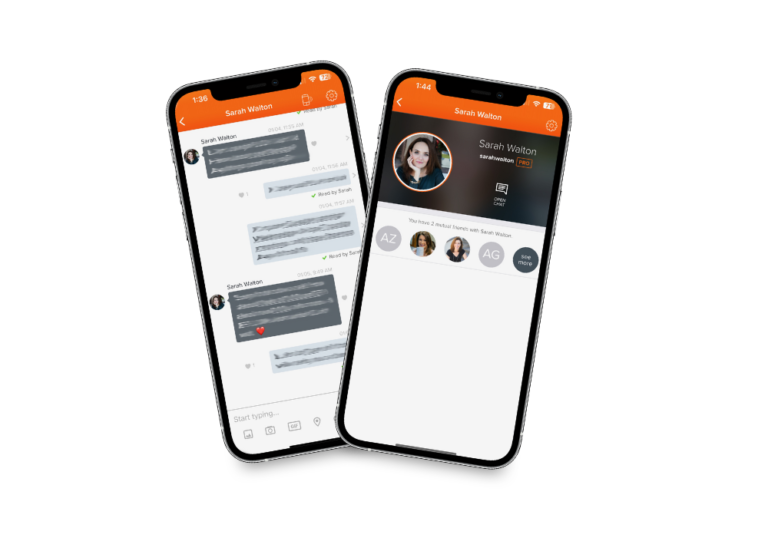
Private Coaching with Sarah
For high-performing women ready for deeply personal work around wealth, business, leadership, and what comes next.
About the author: Sarah Walton is a business coach and Wealth Consciousness expert who has worked with women entrepreneurs and executives for more than 17 years. Her work has been featured on The Today Show, and she is the creator of The Art of Receiving and Abundance Academy.