
Episode 304: The Anger Bag, Shame Sandwich & Question Box: Tools That Help Kids Process Trauma with Jeanette Yoffe
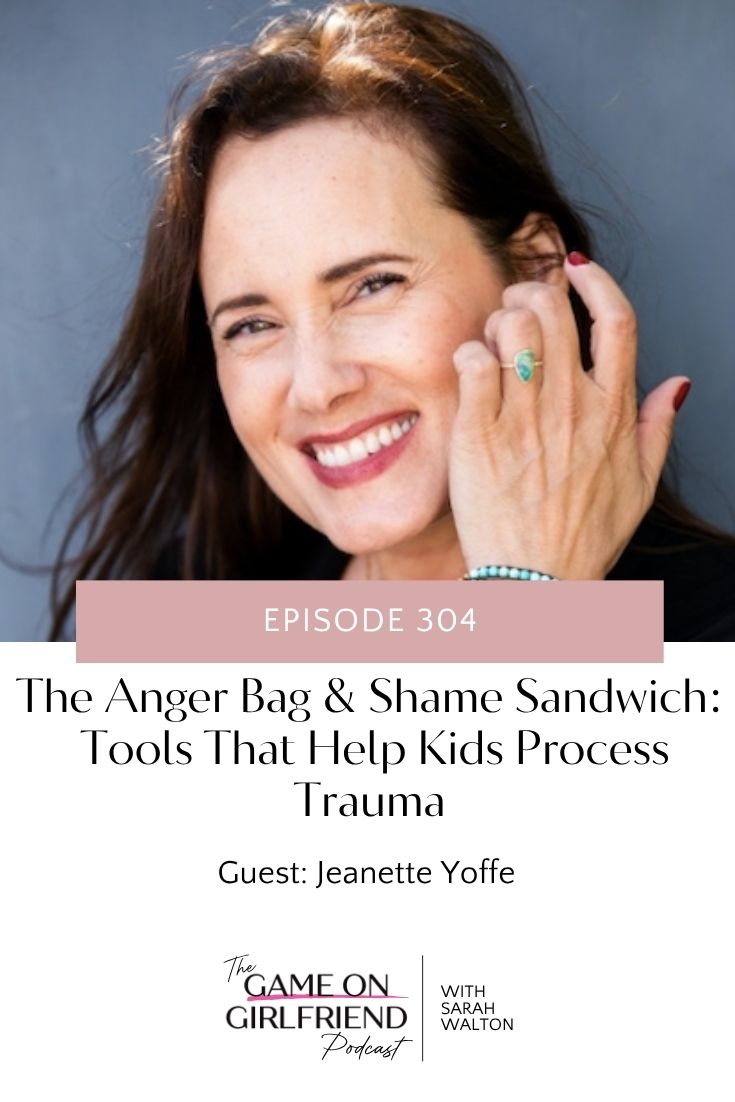
When Children Learn What to Do With Anger: Tools That Actually Help Kids Process Trauma
Here's something most of us don't think about: the anger a seven-year-old carries through nine foster homes doesn't just disappear when they turn 30. It gets sneaky. It hides. It shows up in ways we don't always recognize.
Jeanette Yoffe gets this on a cellular level. She spent six years in foster care before being adopted at seven and a half. Now she's a clinical psychologist creating the exact therapeutic tools she desperately needed as a kid but didn't get until she was 13.
From Theater Stage to Therapy Room
So Jeanette finds her birth father in New York. Finally, right? Except he can't have reunion with her. Secondary rejection on top of years of foster care.
She does what any of us might do when life gets too heavy—she moves across the country to Los Angeles to figure out who she is. Joins a theater company. They encourage everyone to write original work.
What comes out of her surprises everyone, including herself. She writes and performs this short piece about a little girl auditioning for a family. When her adoptive father watches it, he tells her something that lands hard: "It was like you were auditioning for us when you came to us at seven."
"You can't run away from your past. It's part of you. You get to choose what you do with it."
That performance grows into a one-woman play called "What's Your Name? Who's Your Daddy?" She starts doing benefit performances for different agencies. Social workers and licensed therapists show up. During the Q&A sessions, she's up there teaching these professionals about the inner world of foster care—and she's doing it better than their clinical training did.
That's when it clicks. She's standing on stage like an expert because she is one. Los Angeles County has 36,000 children in the foster care system, and she realizes she can actually make a difference in their lives.
The Question Box: Because Not Knowing Creates More Anxiety Than Truth
Listen, every foster and adopted kid has questions. Big ones. Scary ones. The kind that keeps you up at night, wondering why you're not with your birth mom, or where your siblings are, or what you did wrong.
Jeanette's question box is simple in the best way. Grab any box—seriously, a shoebox works. Give the kid stickers and art supplies to make it theirs. Then you introduce it like this:
"I can imagine you have a lot of questions about being in foster care, about your birth family. It's okay to be curious, and talk about it and think about it. As your parent, I'm going to help you get the answers."
Questions get written down and dropped inside. Don't have the answer yet? That's okay. The box holds them—physically and emotionally—until you do.
Here's what gets me: Jeanette is a grown woman with a master's degree and 20 years of clinical experience, and she still has her own question box. The questions don't stop just because you hit adulthood. Having somewhere to put the uncertainty? That helps at any age.
The Anger Bag: Because Sometimes You Just Need to Scream Into a Tube
Jeanette created this for a boy who'd been through nine foster homes. Nine. His anger made complete sense—nobody had ever kept him. Nobody stuck around. He'd internalized this belief that he wasn't worthy of someone refusing to give up on him.
His potential adoptive dad brought Jeanette in. The anger wasn't the problem—it was totally valid. The kid had every right to be furious. What needed work was how to express it without it controlling his whole life.
What Goes Inside an Anger Bag
- Paper to rip (so satisfying)
- Bubble wrap to pop (you know you want to)
- Scream pillow or tube—decorate it however you want
- Play-Doh for when you need to squeeze something
- Lavender oil, because it actually calms your nervous system
- Stuff to draw with
- Anger buster cards that send you outside to hit a tree with a stick and then give it a big hug (kids are resilient like that)
The science behind this matters. Trauma gets stored in your body through your senses—what you saw, heard, felt, and smelled. So releasing it has to happen through those same pathways. These aren't just distraction techniques. They're actual ways to discharge emotion that's stuck in there.
Plot twist: parents who learn about anger bags for their kids end up coming back asking for their own. Turns out most of us never learned how to deal with anger either.
The Shame Sandwich: You're Not the Mistake
When kids go through trauma, they don't think "something bad happened to me." They think "something is fundamentally wrong with me." Big difference.
Jeanette calls this pervasive shame. It's like being trapped in a bubble where all you can see reflected back is your own badness. You can't separate who you are from what went wrong.
"When someone points out something you've done wrong and you personalize it—thinking 'Oh, there's something wrong about me. I'm all bad—that's pervasive shame. You see only your deficient, wrong, unlovable self."
Stop Asking "What's Wrong With You?"
We've all said it. That frustrated parent moment: "What's wrong with you?" But here's the thing—that phrase reinforces shame because you're literally asking the child to identify what's defective about them.
Try these instead: "I see you're really upset right now." "I hear frustration in your voice." "I'm feeling you're angry with me. Am I right?"
See the difference? You're validating their humanity first. You're describing what you observe without making them the problem.
How the Shame Sandwich Actually Works
Jeanette uses a sandwich metaphor because kids totally get it. Think of your favorite sandwich.
Bottom bread is your best friend's voice: "You're a good person. You're learning. It's okay to make mistakes."
The middle—all that turkey, lettuce, pickles, whatever—that's the actual problem—the mistake itself. You look at it objectively. Math is hard. That test was confusing. You're putting in effort.
Top bread brings back that compassionate voice: "You're learning. It's okay to make mistakes. You're not the mistake. The mistake is the mistake."
This teaches kids to separate themselves from their struggles. You can acknowledge that something went wrong without deciding you're fundamentally broken.
The Most Powerful Thing Parents Can Do
You know what's incredibly healing? When you mess up with your kid and then come back later to repair it.
"Hey, this morning was rough, and I'm really sorry. I yelled and I saw the look on your face. I'm not the mistake, but yelling was the mistake. I'm going to learn from that and do something different next time."
Kids perceive anger as rejection. Some roll with it. Others take it deeply personal, creating this whole negative spiral: "My mom's really angry. She doesn't love me."
"When you apologize and take responsibility, your child feels respected, heard, seen, received, validated. Then they learn to do that for others, too."
This is how we change the world, honestly. One kid at a time learning that adults can acknowledge mistakes, that relationships can be repaired, that you're not unlovable just because someone got angry.
What We Resist Persists
Carl Jung said something that Jeanette has on her wall: "It's not what happened to you, it's what you choose to become."
Another principle guides her work: what we resist persists. So when your kid says "I'm stupid" over and over and you keep saying "No, you're not," guess what happens? They say it louder.
Why? Because you're not acknowledging their internal experience. They'll keep screaming it until someone validates that yes, there's a part of them that feels stupid right now.
Once you acknowledge it? The urgency drops. They can start having compassion for that struggling part instead of fighting everyone about it.
From Foster Care to First Responder
Jeanette worked with one client for twelve years, starting when she entered foster care at the age of six. That girl just graduated from high school. She is now training to become an EMT.
She wants to help people. Keep them safe. Protect others the way she was protected.
Many of Jeanette's former clients choose paths like these—hospitals, sheriff's offices, and emergency services. Helping others improves their self-esteem and confidence. Gives them permission to take more risks.
For Jeanette, these stories hit different. The little girl part of her, who felt helpless and powerless, gets this reminder: You're not helpless anymore. You can actually help people now.
Every Kid Benefits From Therapy
Jeanette started therapy at 13. She needed it at five.
We still have this weird stigma around kids' mental health. But therapy teaches essential life skills that everyone needs: self-reflection, perspective, problem-solving, emotional regulation, and structure creation.
"Children benefit from therapy. Take the stigma out of it. It actually makes you a more self-actualized person."
Jeanette still practices her daily routine. Life keeps happening. Challenges keep showing up. The tools that help traumatized kids work for all of us, navigating being human.
The Traumatized and At-Risk Youth Toolbox
After twenty years in this work, Jeanette published "The Traumatized and At-Risk Youth Toolbox." It's got the question box, anger bag, shame sandwich, plus interventions for scary experiences, stress management, and building safety in bodies that have learned the world isn't safe.
She also wrote two children's books: "What is Foster Care?" and "What is Adoption?" No sugarcoating. Real transparency for real kids who are smart enough to handle the truth when someone explains it clearly.
Publishing this felt scary. Presenting foster care and adoption as something other than a Hallmark movie meant potential backlash. But honesty serves kids better than pretty lies.
Where to Find Jeanette
Jeanette founded the Celia Center, Inc., a nonprofit in Los Angeles that supports everyone in the foster care and adoption community—birth parents, foster youth, adoptees, foster and adoptive parents, plus the professionals working with them.
She's also clinical director of Yoffe Therapy, Inc., providing mental health services to families connected by foster care and adoption.
Her YouTube channel is called "Genetically Speaking" (play on her name—love it). She has videos on processing grief, finding peaceful places, and tons of therapeutic interventions.
Books live on Amazon. Find her on Instagram, LinkedIn, and Facebook under Jeanette Yoffe.
Adults Need These Tools Too
Here's the pattern that keeps showing up: adults need these interventions just as much as kids do.
Parents come to sessions for their children. Then they realize they never learned healthy emotional processing either. They come back asking for their own anger bags. They create shame sandwiches for themselves. They start question boxes for their own uncertainties.
Nobody teaches emotional literacy as a basic life skill. We assume people will just figure it out, but most adults are walking around struggling with anger, shame, unresolved questions, and boundary violations just like kids do.
The difference? Kids are still open to learning. Adults often carry decades of dysfunction before asking for help.
"I still do my daily work every day. We're constantly changing, and life keeps happening. It's not 'all better, okay, now I'm good.' That's not how this works."
The Bigger Vision: Emotional Literacy for Everyone
Jeanette's work goes way beyond foster care and adoption. Every single human faces moments of feeling fundamentally unlovable. Every person deals with anger, shame, questions without answers, and violated boundaries.
Dating relationships, family dynamics, work conflicts, friendship struggles—we're constantly testing our worthiness. Always asking: "Is this me? Is there something inherently unlovable here?"
Kids in foster care and adoption face these questions with particular intensity. But the underlying human experience? Universal.
What if we all learned these skills early? What if every kid got a question box, an anger bag, and the shame sandwich metaphor before trauma piled up for decades?
That's what drives Jeanette's work—not just healing individual children, but also creating a cultural shift where emotional literacy becomes a standard part of education.
You Can Start This Today
You don't need a psychology degree for this. Parents, teachers, mentors, caregivers—anyone can make question boxes and anger bags with household stuff.
Start simple. Pick one intervention that resonates. Introduce it with honesty and compassion. Give kids choices about how they use it—trauma survivors especially need to feel control.
Then watch what happens. Notice how getting feelings outside the body reduces internal pressure. See how metaphors create just enough distance to process without getting overwhelmed.
Most important? Use these tools yourself. Model what you want to see. Let kids watch adults acknowledge mistakes, express anger in healthy ways, sit with uncertainty, and separate who they are from what went wrong.
That modeling teaches more than any intervention ever could.
Jeanette transformed her childhood trauma into tools serving thousands of children and families. She chose what to become. Now she helps others make that same choice—one question box, one anger bag, one shame sandwich at a time.
About Jeanette Yoffe
Jeanette Yoffe, M.A., M.F.T. earned her Master's in Clinical Psychology specializing in adoption and foster care, from Antioch University in June of 2002. She treats children, teens, and adults with serious psychological problems secondary to histories of abuse, neglect, adoption, and /or multiple foster care placements. She has specialized for the past 20 years in the treatment of children and teens who manifest serious deficits in their emotional, cognitive, and behavioral development. She is also an adopted person, raised in foster care for 6 years.
She is the Founder of Celia Center Inc, a non-profit organization in Los Angeles supporting all members of the foster care and adoption constellation which includes birth parents, foster youth, adoptees, foster and adoptive parents as well as professionals working in the field.
She is also the Clinical Director of Yoffe Therapy Inc. A mental health center in Los Angeles provides services to families, children, teens, and adults connected by foster care and adoption. Learn more here.
In 2019 she published a one-woman show she performed back in 2000 titled "What's Your Name, Who's Your Daddy?" now available on Amazon and is recorded on Audible. This is a great resource for families, support groups, and agencies, to listen and understand the child's point of view about growing up in foster care and adoption.
She has published her first mental health book of interventions for working with children in foster care and beyond, which will be out in June 2025 titled, “The Traumatized and At-Risk Youth Toolbox: Over 160 Attachment-Informed Interventions for Working with Kids and Families in Foster Care and Beyond” - A must-have intervention book for all professionals and parents working with children in foster care and adoption.
She also has a set of children's books:
"What is Adoption?" and "What is Foster Care?" in English and Spanish.
In 2006 she was awarded the Los Angeles Foster Care Hero Award for her dedication to children and families in foster care.
Jeanette created a YouTube Channel devoted to educating the world about foster care, adoption, and mental health called Jeanette-ically Speaking launching Hand Model of The Brain Video for kids.
She also created 3 animations for children, parents and for social workers to help explain foster care and adoption. What is Foster Care Video, What is Family Court, and What is Adoption Video.
Because of Jeanette’s life experience, she can more easily connect and relate to the children and teens she works with. She is an exceptional child-care worker who is dedicated to helping each of her clients reach their full potential through mental health therapy and make the difficult journey from despair towards resiliency and hope.
Jeanette is frequently asked to speak on panels to prospective adoptive parents and social workers to help provide an understanding of the psychological and emotional impacts of multiple transitions for children in out-of-home care and provide tools for parenting adoptive and foster children.
She has also appeared on television as a guest, on OWN, TLC, and the Hope Network, as a Psychotherapist teaching about Adoption on the shows Raising Whitley, Long Lost Family, and Lifestyle Magazine.
Connect with Jeanette Yoffe
About Sarah Walton
Sarah Walton is a business coach, podcast host, and mentor who helps women entrepreneurs build businesses they love. She's the creator of the Abundance Academy, Effortless Sales, and the Game On Girlfriend® podcast. Sarah's mission is to put more money in the hands of more women while teaching authentic, heart-centered business strategies.
Binge More Game On Girlfriend™ Podcast Episodes


Something Just for You
Freedom in your business is here. Make revenue that allows you to exhale. Grab my free Freedom Calculator below, and know exactly how much your business needs to make so you can be FREE.