
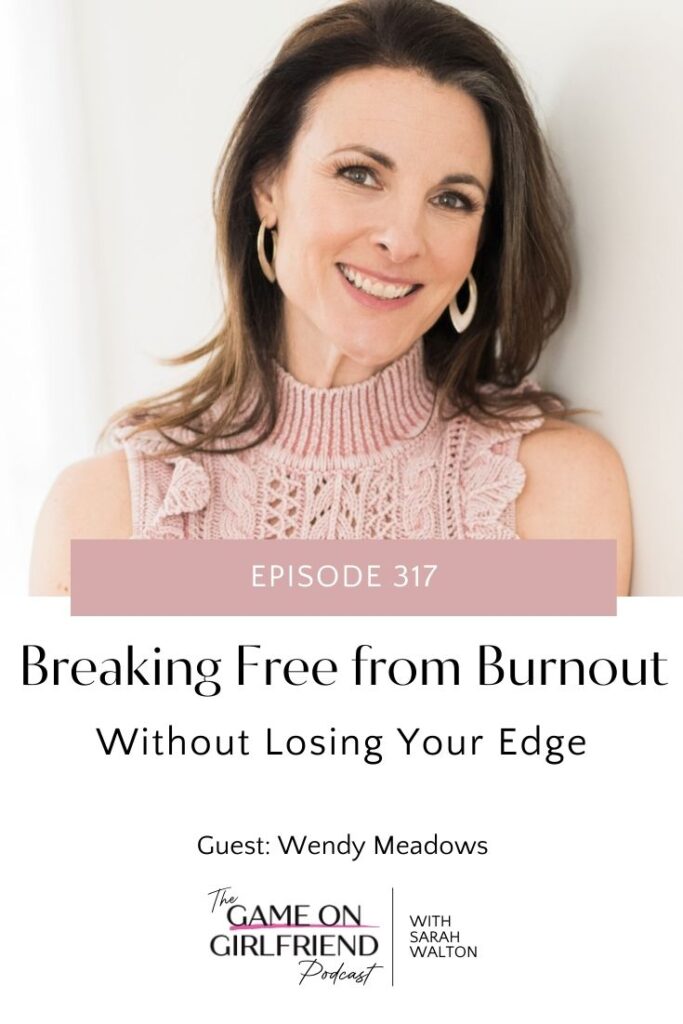
Episode 317: Breaking Free from Burnout Without Losing Your Edge with Wendy Meadows
When Success Stops Feeling Like Success
You’re doing everything right. Like, everything. The business is running, clients are showing up, and money is coming in. But here’s the thing—you feel awful.
Maybe you’re gaining weight you can’t explain. Nothing brings you joy anymore. You’re white-knuckling your way through each day, wondering if this is really what success is supposed to feel like.
This isn’t the kind of burnout where you just don’t feel like working today. This is the deep kind. The kind that settles into your body, seeps into your relationships, and makes you question everything you’ve built. If you’ve ever felt this way, this episode is going to speak to you.
As a family law litigator, Wendy spent years fighting in courtrooms, handling high-conflict divorces, and bringing that combative energy home with her. She had the career, the credentials, the income. But she was losing herself in the process of breaking free from burnout that had completely taken over her life.
In this conversation, Wendy shares her journey from litigation to mediation and coaching. She talks about what real work-life balance actually looks like—not the picture-perfect version, but the messy, moment-by-moment kind that lets you show up as who you need to be each day.
We get into recognizing burnout before it completely breaks you, finding work that feels aligned, and why having girlfriends who will lovingly call you out might be your most valuable business asset. Seriously.
Watch the full episode
From Courtroom Combat to Compassionate Coaching
The Wake-Up Call That Changed Everything
Wendy didn’t have one of those lightning bolt moments where everything suddenly made sense. Instead, she had a series of realizations that gradually shifted her perspective.
Picture this: She’s screaming at opposing counsel while driving down the road. Then she’s listening to Rachel Hollis say, “No one’s going to dream your dream like you,” and something inside her just cracks open. Then comes her first collaborative law case, where everyone treats each other like actual human beings instead of adversaries.
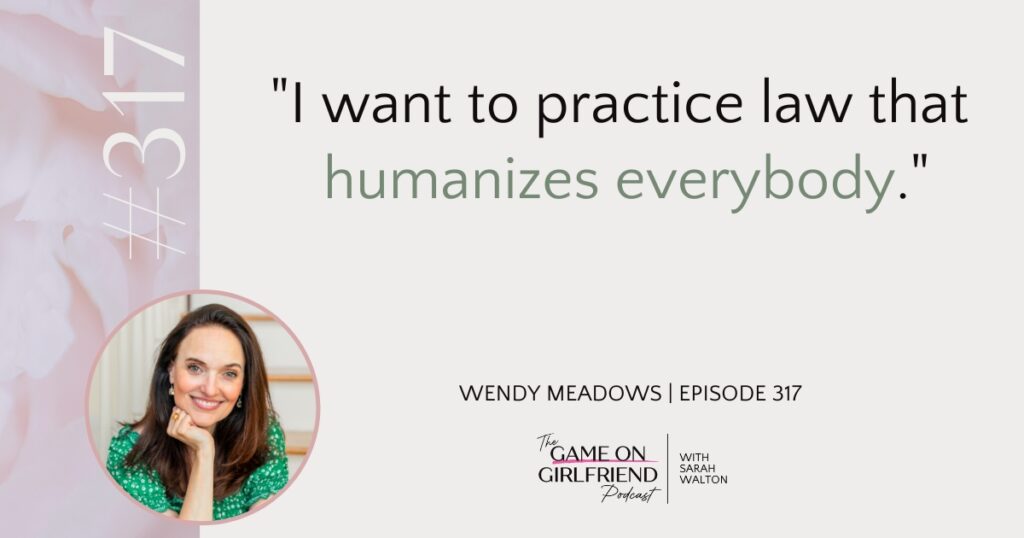
“I want to practice law in a way that humanizes everybody.” — Wendy Meadows
These moments kept piling up until Wendy couldn’t ignore them anymore. The work she was doing didn’t align with who she was at her core. She wanted to help people, not tear them down on witness stands. She needed to find a different path forward.
How Health Coaching Changed Her Legal Practice
Around 2016, Wendy became a health and wellness coach. She started coaching women every morning at 5 AM, plugging into Facebook communities and having these really transformative conversations. At first, this seemed totally separate from her legal work.
Then something wild happened. She started bringing that same coaching vocabulary, that curiosity, that compassion into her conversations with family law clients. The results were immediate.
Her clients responded so differently. They felt heard. They got better outcomes. Meanwhile, the attorney in the office next to Wendy kept asking why everyone was always laughing in her office. The answer? Wendy was talking to people like real human beings, not just case files.
This shift helped Wendy realize she could practice law in a completely different way. She could help couples find resolution with dignity instead of destruction. She could be the person she wanted to be while still being an excellent attorney.
Making People Feel Beautiful Started Early
As a teenager, her friends and her mother's friends would come over so she could do their hair and eyebrows. It was organic. Something she genuinely loved doing.
But loving something and building a successful business around it? Two completely different things. Women entrepreneurs building confidence can learn from Sarai's early commitment to her craft.
What Real Work-Life Balance Actually Looks Like
The Myth of Perfect Balance
Here’s something nobody tells you about work-life balance: it’s not a destination you reach and then maintain forever. You don’t suddenly arrive at some perfect equilibrium where work is exactly this percentage and family is exactly that percentage.
Wendy says balance is something different entirely. It’s about constant check-ins with yourself. Am I burnt out right now? Why? What’s going on? What do I need to adjust?
“Do I have a hard time with balance? We all do, right? It's never perfect. My secret is deciding who we want to be each day. Where does our attention need to go the most? And in that moment, who do we need to be, and if we have checked that off, we're good.” — Wendy Meadows
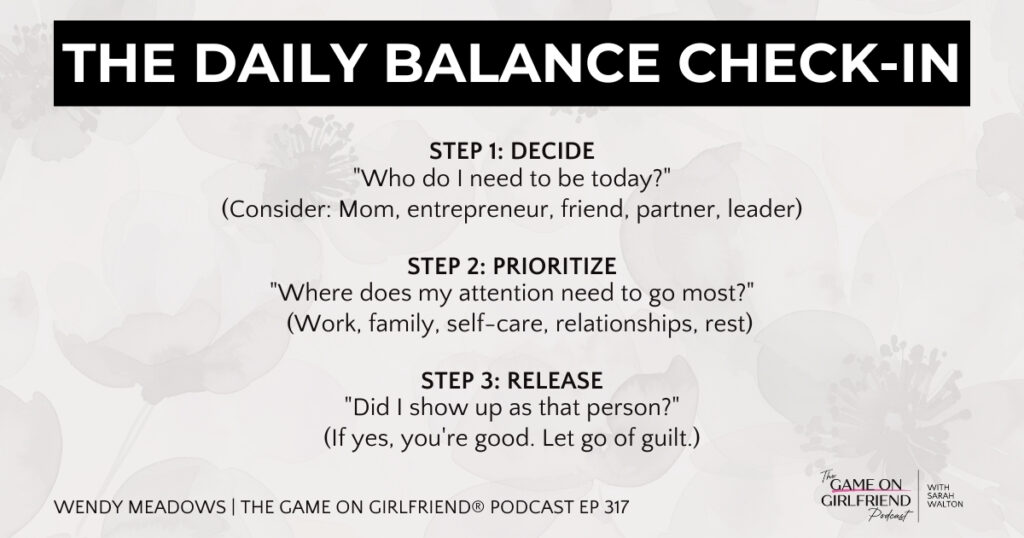
Some days, your attention needs to go to work. Other days, being a present parent takes priority. Sometimes being a good friend matters most. The key is to consciously choose where your energy goes, instead of letting default patterns or guilt drive your decisions.
Protecting Your Headspace
One of Wendy’s biggest breakthroughs came from learning how to protect her mental space. As a litigator, she noticed she was bringing that combative energy home. Her body would literally respond—she’d feel puffy and gain weight from all the conflict.
Even now, her 13-year-old son likes to live in a state of constant debate. She reminds him gently that she left that life behind. She doesn’t need to be in conflict mode anymore, and neither does he.
Learning to create boundaries between different parts of her life became essential. Without those boundaries, the stress from one area inevitably leaked into everything else. Can you relate?
The Signs You’re More Burned Out Than You Think
When Burnout Goes Deeper Than Tired
There’s a difference between feeling unmotivated for a day and experiencing real burnout. Real burnout shows up in your body. You might gain weight without changing your eating habits. You could feel constantly puffy or inflamed. Things that used to light you up suddenly feel flat.
Wendy experienced all of this during her time as a litigator. Looking back, she can see clearly how burned out she was. At the time, though, she didn’t fully recognize it. She just knew something felt really off.
The turning point came around 2015-2016, when her youngest child was 18 months old. As she puts it, that’s when your brain starts coming back online after the baby years. Suddenly, she could think clearly again and ask herself hard questions: Why don’t I feel good? What do I actually want?
The Numbing vs. Living Question
While writing her book “Sparkle and Grit,” Wendy had this powerful realization about why she and many women attorneys were drinking too much. She traced it back to college, when drinking led to the dance floor—the fun, the freedom, the joy.
As an adult, she realized she was either numbing out from stress or seeking fun that should have already been present in her life. When you find yourself regularly numbing or escaping, it’s worth asking two questions: What am I trying to avoid? And what am I really looking for?
These questions can reveal some pretty important truths about what’s not working in your life and what needs to change.
Why Coaching Works When Everything Else Doesn’t
The Power of Better Questions
Coaching changed everything for Wendy, first as a practitioner and then in how she showed up for her clients. Instead of focusing solely on finances and legal outcomes, she began asking different questions.
What do you really want? Who do you want to become through this process? Where do you need support? These questions opened up entirely new conversations and possibilities.
Her legal clients responded immediately to this approach. They felt seen as whole people, not just as cases to win or lose. The quality of their outcomes improved because they weren’t just fighting—they were actually solving problems together.
Creating Internal Scaffolding
One of the most valuable things coaching does is create what you might call internal scaffolding. It gives people a framework to lean on as they accomplish what they want, whether that’s navigating a divorce, building a business, or making a major life change.
This scaffolding supports you through the messy middle, when motivation fades, and obstacles appear. It helps you keep moving forward even when things get hard. Because they will get hard—that’s just how growth works.
The Girlfriends Who Keep You Real
What Makes a Good Girlfriend
Wendy’s definition of a good girlfriend has evolved so much over the years. In her early 30s, she admits she was super judgmental about friendships. If someone didn’t show up to her party, it felt like a betrayal.
Now she gets that a good girlfriend isn’t someone who just agrees with everything you do. A real friend speaks truth with love. She’ll gently (or not so gently) tell you when you’re being ridiculous, but she does it because she has your back.
Wendy has a Marco Polo group with four other women that’s been going strong since 2020. They exchange about 20 video messages every day. Each person serves a different role, and they all understand each other’s Enneagram types so they can receive love in the ways they each need it.
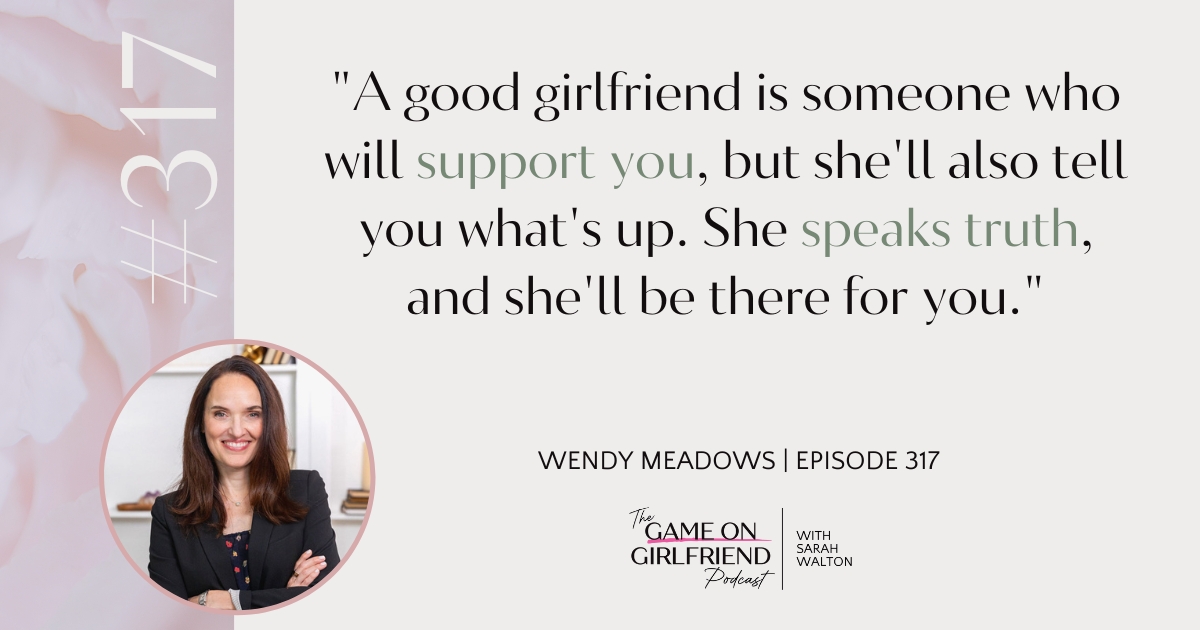
“A good girlfriend is someone who will support you, but she’ll also tell you what’s up. She speaks truth, and she’ll be there for you.” — Wendy Meadows
Time Isn’t the Most Important Factor
For a long time, Wendy thought good friendships required lots of time together. She’s since realized that’s not actually what matters most.
What matters is having each other’s backs. It’s being willing to have hard conversations instead of just walking away when conflict arises. It’s truly listening and asking what each person needs from the friendship.
“A good girlfriend, too, is like, ok, we have conflict, but let's talk about it instead of not being friends anymore. Talk open and honest. Hear what the other person is saying, and receive it and learning and moving forward.” — Wendy Meadows
Wendy would love to spend more time with certain friends, but the time constraint doesn’t diminish the depth of those relationships. They show up for each other in the ways that count most.
Your Role in the Bigger Picture
Why Every Woman’s Work Matters
While writing “Sparkle and Grit,” Wendy crafted a mission statement that still gives her chills every time she says it:
“Women need encouragement and light. With better-rested, more empowered women, we have the duty and power to change the world.” — Wendy Meadows
She wrote this in 2022, right after the Nashville shooting and in the midst of processing COVID, political upheaval, and so much collective trauma. She asked herself how she could make her mark on the world, and the answer became clear: help women feel encouraged and lit up so they can do their part.
Because every woman has a part to play. Your role might seem small, but it’s not. Maybe you’re the barista who makes coffee that helps someone feel energized enough to do their best work. That work might influence policy that helps children. Every single piece matters in the bigger picture.
Finding Work That Feels Good
After giving up litigation—which accounted for a large portion of her income—Wendy had to trust she could make money in other ways. She decided to turn on different revenue streams and focus on work that aligned with who she is.
Now she practices law through mediation and collaborative law, and serves as a best-interest attorney for children. She coaches high-achieving women through burnout. She speaks to law firms about preventing burnout and increasing retention.
All of these roles allow her to be helpful, compassionate, and genuine. She can sleep well at night knowing she’s making a real difference. That’s what finding work that feels good actually means—not perfect, not easy, but aligned with your values.
Listen to or Watch the Full Episode
Want to hear the complete conversation? Listen to the full episode here, or watch the video version here.
About Wendy Meadows
Wendy S. Meadows is a seasoned family law attorney, former litigator, certified life coach, and mediator. She’s also the author of the best-selling book “Sparkle and Grit,” a framework that helps high-achieving women break free from burnout and live on purpose.
Today, Wendy helps women who’ve “checked all the boxes” but still feel stuck. She blends practical strategies with compassionate mindset work to help them reboot their habits, re-ignite their purpose, and build lives that actually fit.
She also works closely with lawyers, especially those ready to go solo or restructure their practices. She offers strategic coaching, systems consulting, and speaking engagements for law firms looking to prevent burnout, increase retention, and foster sustainable success.
Connect with Wendy
Free Resource: Download the Pause Time Playbook here, a 7-day email series with a downloadable journal that helps you learn how to pause time in your own way and decide who you need to be each day.
About Sarah Walton
Sarah Walton is a business coach, podcast host, and mentor who helps women entrepreneurs build businesses they love. She's the creator of the Abundance Academy, Effortless Sales, and the Game On Girlfriend® podcast. Sarah's mission is to put more money in the hands of more women while teaching authentic, heart-centered business strategies.
Ready to Build a Business That Supports Your Life?
If you’re tired of pushing through burnout and ready to create a business that actually feels good, let’s talk about what’s possible for you.
Schedule your free 15-minute call and let’s discuss a business plan that works with your life, not against it.



Something Just for You
Freedom in your business is here. Make revenue that allows you to exhale. Grab my free Freedom Calculator below, and know exactly how much your business needs to make so you can be FREE.